JellyBlue Official Website › Blog › Three Front-Panel Words
Three Words On The Front Of The Bottle, And What Their Trials Actually Measured
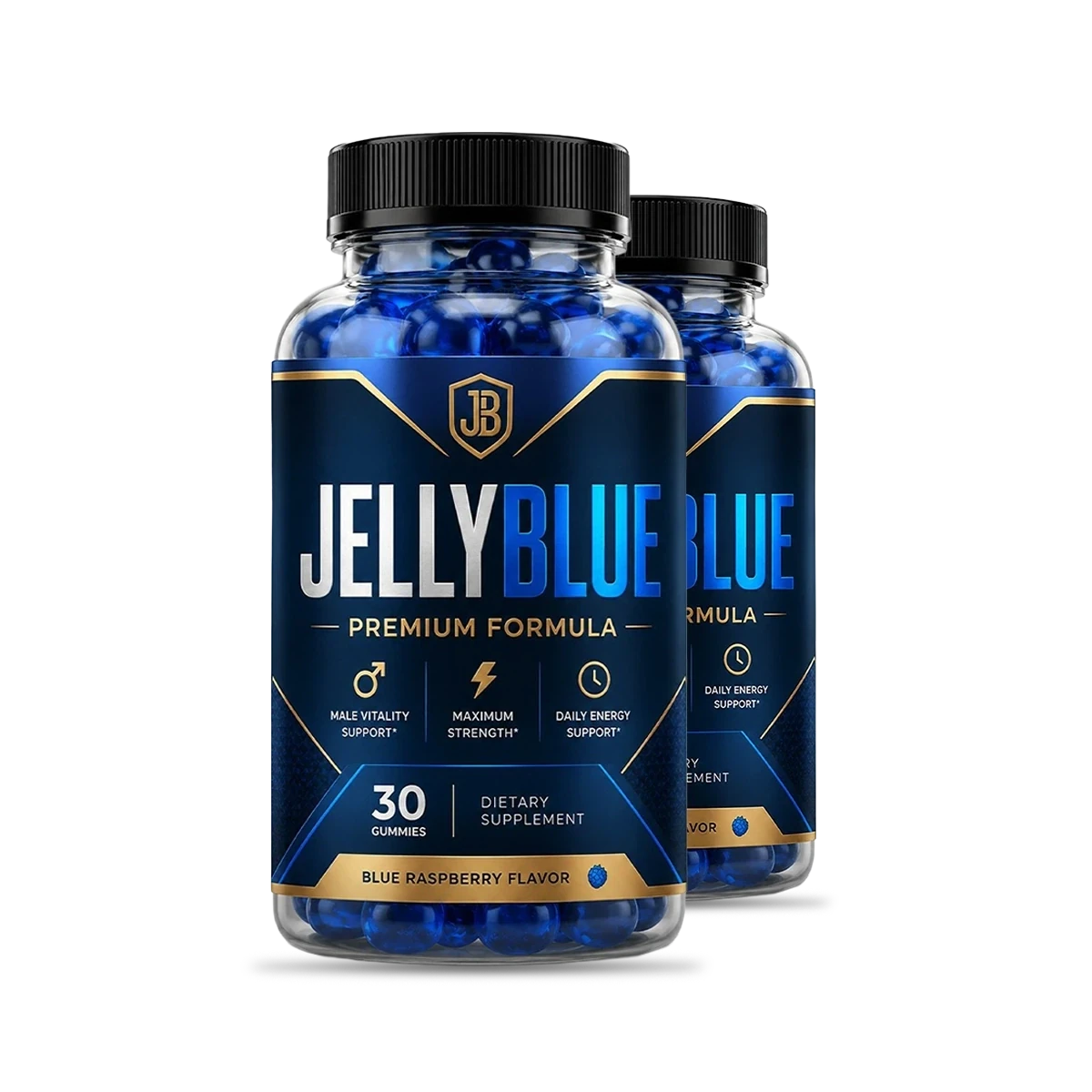
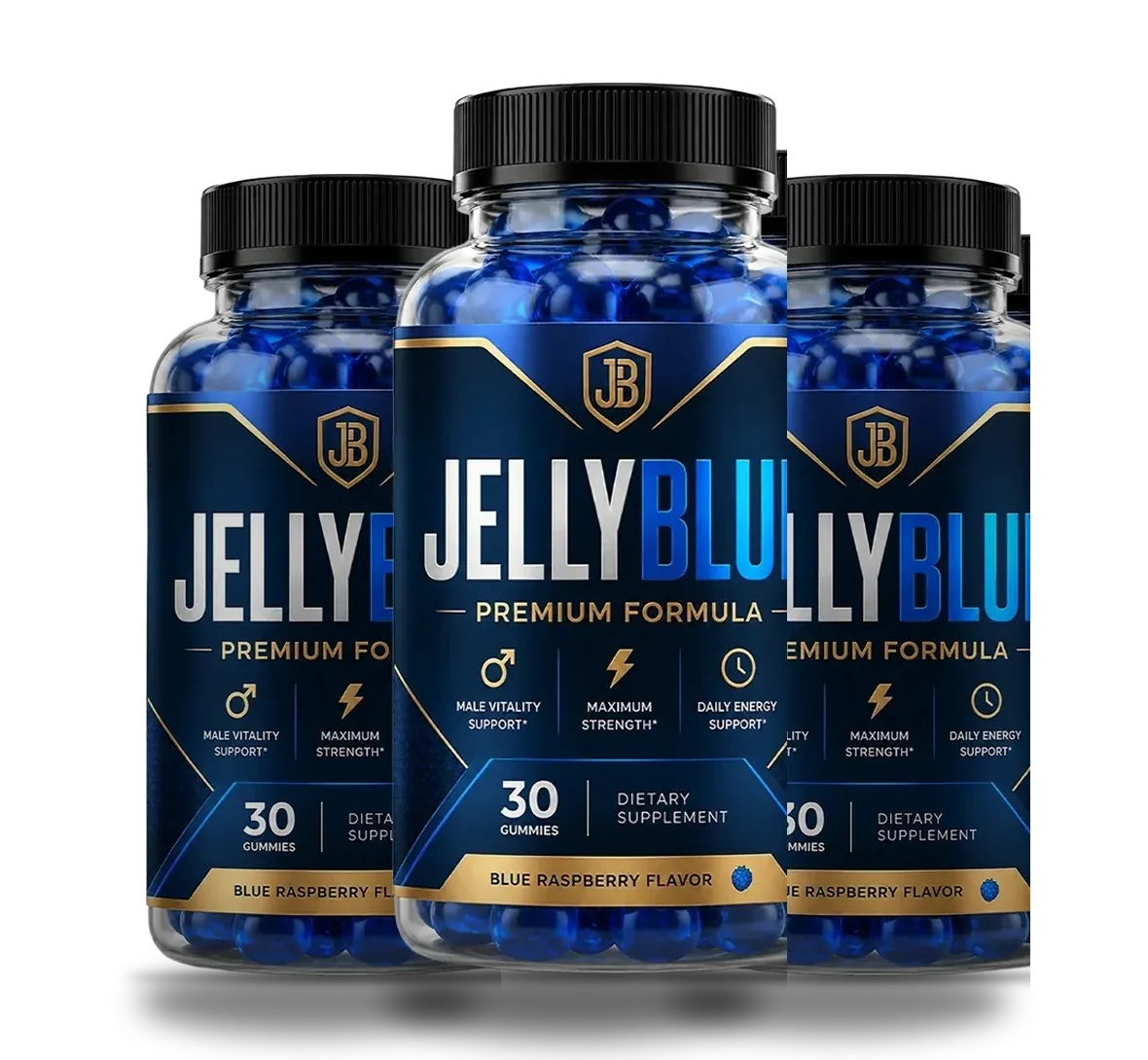
The JellyBlue front panel prints three phrases under three icons: male vitality support, maximum strength and daily energy support. Each phrase points at a different kind of published research - a hormone assay, a barbell in a gym, a questionnaire about mood and focus - and the three kinds of evidence are not interchangeable. This post maps each phrase to the trial behind it and reads what each one actually measured.
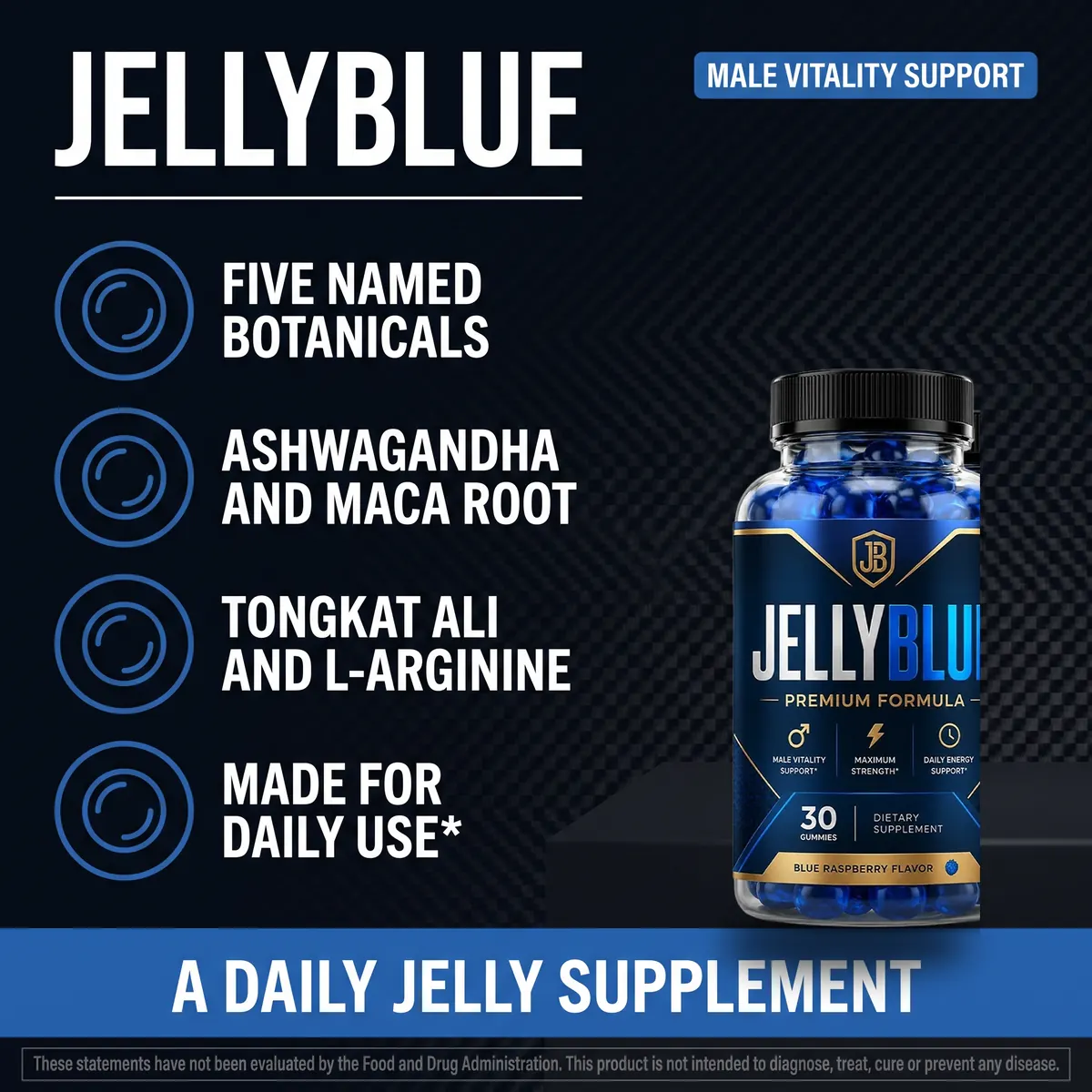
- "Male vitality support" traces to a testosterone trial. The primary measurement was a blood test.
- "Maximum strength" traces to resistance-training trials. The primary measurement was a 1-rep-max lift.
- "Daily energy support" traces to a cognition-and-mood trial. The primary measurement was a questionnaire and a computerised test battery, not a blood test.
- Every trial behind these three phrases used a dose at or above 500 mg of its active ingredient a day. This panel's matching rows sit at 100-200 mg.
- One active on this panel - horny goat weed - has no human trial measuring any of the three claims.
Three words, three icons
This site's own Supplement Facts page has already noted that the front panel prints exactly three phrases and that this website does not add a fourth. What it has not done yet is trace each of those three phrases back to a specific kind of trial. That is the point of this post: not whether the claims are true in some general sense, but what a researcher actually put a stopwatch, a barbell or a blood draw to when testing the ingredient behind each one.
Male vitality support: a blood test
"Male vitality support" sits most naturally beside tongkat ali, the largest single amount on this panel at 200 mg. The trial behind it, covered in more depth in this site's own dosage analysis, gave 105 men aged 50 to 70 either 100 mg or 200 mg a day of a standardized extract for twelve weeks. Its primary measurement was serum total testosterone, drawn and analysed in a laboratory at weeks 4, 8 and 12. Secondary measurements included an ageing-male symptom questionnaire, a fatigue scale and a muscle-strength test, but the headline result - and the one a meta-analysis of five pooled trials later confirmed - was a number from a blood test.
A laboratory value is a relatively hard endpoint: it does not depend on how a participant felt that morning. It is also a narrow one. A higher testosterone reading is not the same measurement as a participant reporting they feel more capable, and the trial's own secondary scales existed precisely because the authors knew that gap needed a separate instrument to close.
An earlier randomised trial of the same standardized extract, cited on this site's own dosage analysis, measured that second question directly: it tracked quality of life and sexual well-being using validated questionnaires rather than a blood test alone. Reading the two trials together is the more complete picture "male vitality support" is drawing on - one instrument for the hormone, a separate one for how a participant said he felt - and neither instrument, on its own, would fully cover what the phrase implies.
Maximum strength: a barbell, and a fragile result
"Maximum strength" points most directly at ashwagandha, and unusually for this panel, ashwagandha has real resistance-training research behind it - though the most recent synthesis of that research is more cautious than the individual trials that feed it.
The 2018 STAR Trial gave 500 mg a day of a standardized aqueous extract to recreationally active men doing a structured resistance-training program for twelve weeks, and measured 1-rep-max squat and bench press directly on a barbell. The ashwagandha group gained significantly more on both lifts than placebo. A 2015 trial using 600 mg a day (300 mg twice daily) of a root extract found the same pattern over eight weeks: significantly greater bench-press and leg-extension 1-rep-max gains, plus a significant rise in serum testosterone as a secondary measure.
Pooling that kind of trial is where the picture gets more careful. A 2026 meta-analysis that confined itself to trials combining ashwagandha with structured resistance training found only four eligible randomised trials, three of them poolable, covering 161 people. The pooled estimate favoured ashwagandha for 1-RM bench press and lower-body 1-RM. But under a stricter statistical adjustment the authors applied as a sensitivity check, both strength estimates lost statistical significance, and each depended heavily on a single influential trial. The authors rated the certainty of the strength evidence as low, and concluded that current evidence does not establish that ashwagandha meaningfully enhances resistance-training adaptations, even while noting the individual trial results point toward a possible benefit.
The individual trials read as a positive result: two separate studies, two different extract preparations, both finding significantly greater strength gains on a barbell. The meta-analysis that pools them reads as a fragile one: few trials, small numbers, and a result that depends on which statistical method is used to combine them. Both readings are honest. They are simply answering different questions - "did these particular trials find an effect" against "how confident should a claim about ashwagandha and strength be in general."
Read every claim against its own trial
Three front-panel phrases, three kinds of endpoint, and the doses each trial actually used - printed on this site alongside the label.
Two bottles $158 · three bottles $207 · six bottles $294 · 60 days from the day you pay, opened bottles accepted
Order JellyBlueOne gummy a day · 30 to a bottle
Daily energy support: a questionnaire, not a blood test
"Daily energy support" is the hardest of the three phrases to pin to a single laboratory number, because the research behind it was not designed to produce one. A 2026 randomised trial gave adults with self-reported cognitive and energy problems 600 mg a day of ashwagandha root extract for eight weeks and measured outcomes with a computerised cognitive test battery, a mood-states questionnaire, a mental-fatigue scale and an executive-function inventory. Episodic memory, working memory and attention accuracy all improved significantly against placebo, as did the mood, vigor and executive-function scores.
None of those instruments is a blood test. They are validated psychological and cognitive measures, which is standard practice for a trial about energy and mood - there is no laboratory assay for how energetic someone feels - but it means "daily energy support" rests on self-report and performance-test data rather than the kind of hard physiological number behind the vitality claim above.
That is not a weakness unique to this claim or this ingredient. Mood, focus and perceived energy are subjective by definition, and a validated questionnaire completed under blinded, placebo-controlled conditions is the accepted way research measures them - the alternative is not a better blood test, because none exists. The point worth carrying forward is narrower: a reader comparing "male vitality support" against "daily energy support" is comparing a hormone assay against a mood questionnaire, and that is a difference in kind, not just in result.
A 30 mg trial that complicates the dose story
Every trial cited so far used 500 mg or 600 mg of ashwagandha a day - five to six times the 100 mg on this panel. A newer trial complicates a simple "more milligrams, more effect" reading of that gap. An eight-week randomised trial tested a bioactive-optimized, root-only extract standardized to more than 15% withanolides by weight, at a dose of just 30 mg a day, and found significant improvements in VO2max, exercise-induced fatigue scores and recovery markers compared with placebo.
That result does not transfer to this panel's 100 mg row - the two are different, unnamed preparations, and this site's own post on what the word "extract" leaves out covers why a milligram figure alone cannot settle that. What it does show is that dose and effect are not a simple straight line: a small amount of a specifically standardized extract outperformed what a larger, less-specified amount might do, at least in this one trial.
The active with no endpoint at all
Not every row on this panel has a trial to check against any of the three front-panel phrases. Horny goat weed, printed at 100 mg, has laboratory and animal research behind its marker compound icariin, but no published human clinical trial measuring erectile function, strength or energy in people. That gap was already documented in this site's own dosage comparison table, and it applies here too: for one of the seven names on this panel, none of the three front-panel words has a human endpoint to be measured against at all.
All three claims, side by side
| Front-panel phrase | Active it points to | Primary endpoint type | Trial dose | Panel amount |
|---|---|---|---|---|
| Male vitality support | Tongkat ali | Serum testosterone (blood test) | 200 mg/day | 200 mg |
| Maximum strength | Ashwagandha | 1-rep-max lift (performance test) | 500-600 mg/day | 100 mg |
| Daily energy support | Ashwagandha | Cognitive battery, mood scale (self-report) | 600 mg/day | 100 mg |
Tongkat ali's trial dose is the one row on this whole panel that matches - a point this site's own dosage analysis covers in detail. Ashwagandha carries two of the three front-panel claims and matches neither trial dose.
What "measured" does and does not mean
None of this means the three front-panel phrases are false. It means they are built on three different kinds of evidence, at doses this panel's rows do not reach for two of the three ingredients involved, and that a phrase like "energy support" is inherently a self-report measurement in a way a phrase resting on a testosterone assay is not. Reading a supplement claim well means asking which of these three kinds of trial - if any - actually stands behind the specific words on the bottle, rather than treating "supported by research" as one undifferentiated category.
References
- Chinnappan SM, George A, Pandey P, et al. Effect of Eurycoma longifolia standardised aqueous root extract-Physta on testosterone levels and quality of life in ageing male subjects: a randomised, double-blind, placebo-controlled multicentre study. Food Nutr Res. 2021;65:5647. PMID 34262417. https://pubmed.ncbi.nlm.nih.gov/34262417/
- Lee JC, Heo AS. Adjunctive Ashwagandha (Withania somnifera) Supplementation and Resistance-Training Adaptations in Healthy Adults: A Systematic Review and Random-Effects Meta-Analysis of Muscular Strength, Chest Circumference, and Body Composition. Nutrients. 2026;18(17):2815. PMID 42738987. https://pubmed.ncbi.nlm.nih.gov/42738987/
- Ziegenfuss TN, Kedia AW, Sandrock JE, Raub BJ, Kerksick CM, Lopez HL. Effects of an Aqueous Extract of Withania somnifera on Strength Training Adaptations and Recovery: The STAR Trial. Nutrients. 2018;10(11):1807. PMID 30463324. https://pubmed.ncbi.nlm.nih.gov/30463324/
- Wankhede S, Langade D, Joshi K, Sinha SR, Bhattacharyya S. Examining the effect of Withania somnifera supplementation on muscle strength and recovery: a randomized controlled trial. J Int Soc Sports Nutr. 2015;12:43. PMID 26609282. https://pubmed.ncbi.nlm.nih.gov/26609282/
- Kale S, Lopresti A, Suri R, Garg N, Langade D. Safety and Efficacy of Ashwagandha Root Extract on Cognition, Energy and Mood Problems in Adults: Prospective, Randomized, Placebo-Controlled Study. J Psychoactive Drugs. 2026;58(1):45-57. PMID 39498904. https://pubmed.ncbi.nlm.nih.gov/39498904/
- Prajapati H, Satia M, Shah D, Basera I, Shah T. Efficacy and Safety of Low-Dose Ashwagandha Supplementation on Exercise Endurance: A Randomized, Placebo-Controlled, Double-Blind, Clinical Trial. Phytother Res. 2026;40(8):4978-4987. PMID 41846233. https://pubmed.ncbi.nlm.nih.gov/41846233/
More about JellyBlue
Order JellyBlue knowing what each claim rests on
Three front-panel words, three kinds of trial, and the doses each one used - all printed on this site.
Two bottles $158 · six bottles $294 · 60 days from the day you pay, opened bottles accepted
Order JellyBlueOne gummy a day · 30 to a bottle