JellyBlue Official Website › Blog › Extract, Printed Seven Times
Extract, Printed Seven Times: What This Panel Does Not Say
Every active ingredient on the JellyBlue Supplement Facts panel carries the word extract. Tongkat ali extract. Maca root extract. Ashwagandha extract. Seven rows, seven times the same word, and not one row says what ratio of raw plant went into that extract, which part of the plant it came from, or how much of the compound the trials actually measured it contains. Two published lab audits show why that missing information is not a technicality.
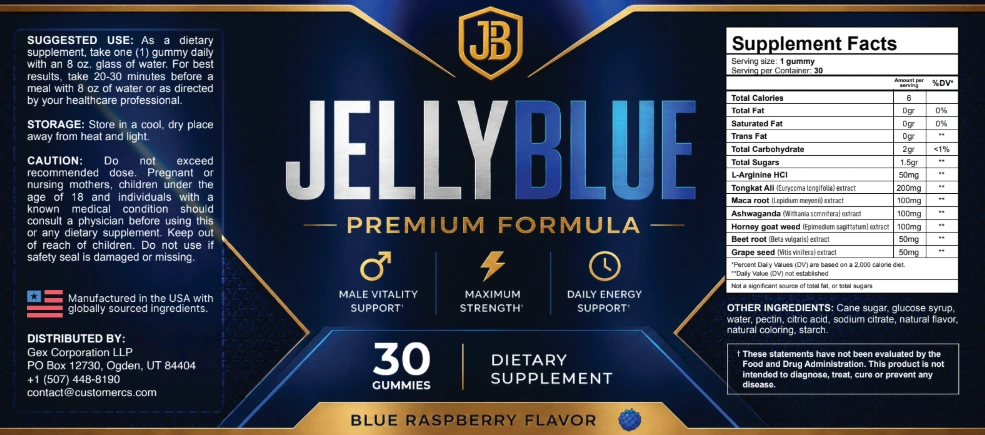
- All seven JellyBlue actives are printed as an "extract" of the named plant.
- None of the seven rows states an extraction ratio, a standardized marker compound or which part of the plant - root, leaf or aerial - was used.
- A 2026 laboratory audit of commercial ashwagandha supplements found 44% failed one pharmacopoeia's quality standard and 60% failed another's, largely over undisclosed leaf and stem material.
- A separate chromatography study found maca's own chemical fingerprint changes by growing region, in ways a label never records.
- None of this means the panel is wrong. It means "extract" is doing less work than it looks like it is doing.
Seven rows, one unspecified word
Read the JellyBlue panel row by row and the word "extract" appears seven times, once beside every active name: L-Arginine HCl, Tongkat Ali extract, Maca root extract, Ashwagandha extract, Horny goat weed extract, Beet root extract, Grape seed extract. That word means something specific in a research paper. A trial will usually name a supplier, a standardization method and a percentage of a named marker compound - the tongkat ali research behind this site's own dosage analysis used a branded, standardized aqueous root extract, not an unnamed one. This panel names none of that for any of the seven rows.
That is not unusual for a gummy in this category, and it is not a legal problem - federal labeling rules do not require a supplement panel to disclose an extraction ratio. It is, however, a real gap between what the panel says and what the research behind each ingredient specifies, and it is worth walking through exactly what that gap contains.
What a ratio and a marker compound would have told a buyer
Two pieces of information turn a vague word like "extract" into something checkable.
- An extraction ratio (sometimes printed as a drug-extract ratio, such as 10:1) states how many parts of raw plant material went into one part of the finished extract. A 10:1 root extract is not the same substance as a 4:1 extract of the same root, even at an identical milligram weight on a label.
- A standardized marker compound states what percentage of a specific, measurable chemical the extract is guaranteed to contain - withanolides for ashwagandha, macamides for maca, icariin for horny goat weed, eurycomanone or a glycosaponin for tongkat ali. Trials typically standardize to one of these so the dose they tested can be reproduced.
This panel prints neither figure for any of its seven rows. A reader can compare the 200 mg tongkat ali figure against a trial that also used 200 mg, as this site has done elsewhere - but nothing on the bottle confirms the two 200 mg amounts are the same substance at the same concentration.
Ashwagandha: the one ingredient somebody actually checked
Most botanical ingredients in this category have not been audited this closely, but ashwagandha has - and the result is the sharpest illustration in this post of what an unspecified "extract" can be hiding.
A 2026 study from the National Center for Natural Products Research built a chromatography method to measure three steroidal lactones - withaferin A, withanolide A and withanoside IV - in ashwagandha raw materials and 25 commercial supplement products, then checked the results against British Pharmacopoeia and US Pharmacopoeia standards. Over 44% of the products failed the British standard and 60% failed the US standard. The paper traces the failures largely to undisclosed aerial-parts material - leaf and stem rather than root - which co-elutes with a compound that causes withanolide A to be underestimated. Only 10 of the 25 products met both pharmacopoeial standards, and of those, only two were confirmed as made from root alone. The rest contained varying, undisclosed proportions of aerial parts.
Traditional use of ashwagandha is root-only. The commercial surge in aerial-parts material - driven partly by cost - means two products both labeled "ashwagandha extract, 100 mg" can be chemically different substances, and this audit found most labels tested gave no way to tell which one a buyer was holding. This is exactly the kind of distinction the JellyBlue panel's own "Ashwagandha extract (Withania somnifera), 100 mg" row does not resolve.
Maca: same plant, four origins, four chemical fingerprints
Maca root's active compounds are a family of molecules called macamides and macaenes, and a 2026 chromatography study extracted and measured them in maca grown in three regions of Yunnan, China and in Cerro de Pasco, Peru - the plant's traditional home. The content and profile of macamides and macaenes differed clearly enough by growing region that the researchers could use those compounds alone, with statistical analysis, to correctly sort the samples back into their region of origin.
A panel that prints "Maca root extract (Lepidium meyenii), 100 mg" is naming the species correctly - the Latin binomial is accurate and specific. It says nothing about where that root was grown, and this study shows that origin alone can shift the extract's chemical make-up in a measurable way.
Why a legal panel can still say this little
None of this makes the JellyBlue panel non-compliant. 21 CFR 101.36 - the regulation this site's own Supplement Facts page already cites - sets out what a Supplement Facts panel has to contain, and an extraction ratio or standardization marker is not on that required list for a botanical listed by common or usual name and Latin binomial with a milligram weight. A panel can be fully compliant and still leave out information a research paper would consider basic.
That is worth separating clearly from the panel's other honesty: this site has already documented that JellyBlue prints seven individual milligram amounts with no proprietary blend anywhere, which is genuinely uncommon in this category. Naming an amount and naming a concentration are two different disclosures, and this panel makes the first one and not the second.
Tongkat ali is the one row where this site can point to what a named preparation looks like, because the trial behind this site's own 200 mg dosage analysis used a specific, branded, standardized aqueous root extract - the kind of detail a research paper cannot omit, because another laboratory has to be able to obtain the same material to repeat the study. The JellyBlue panel prints "Tongkat Ali extract (Eurycoma longifolia), 200 mg" without that brand name or standardization figure. The two 200 mg amounts could be the same preparation. Nothing on the bottle says so either way, and that single row is the clearest illustration on this whole panel of the gap this post is about: a matching number without a matching identity.
Label claims against analytically verified content
The gap between what a supplement label states and what a laboratory measures is not specific to botanicals. The Dietary Supplement Ingredient Database, maintained by the USDA and the NIH Office of Dietary Supplements, exists specifically because manufacturers routinely add ingredients at levels above or below the declared label amount, and those overages are not standardized across the industry. The same paper reports that analytical overages above 20% of the labeled amount are common for several nutrients across a majority of multivitamin products it studied.
That database covers vitamins and minerals, which are far easier to measure than a botanical extract's full chemical profile. For a botanical, the identity question comes before the quantity question - which is precisely what a 2025 review of botanical authentication methods lays out: microscopy, chromatography, spectroscopy and DNA-based testing are the tools laboratories use to confirm a plant extract actually is what its label says, because visual and label inspection alone cannot settle it.
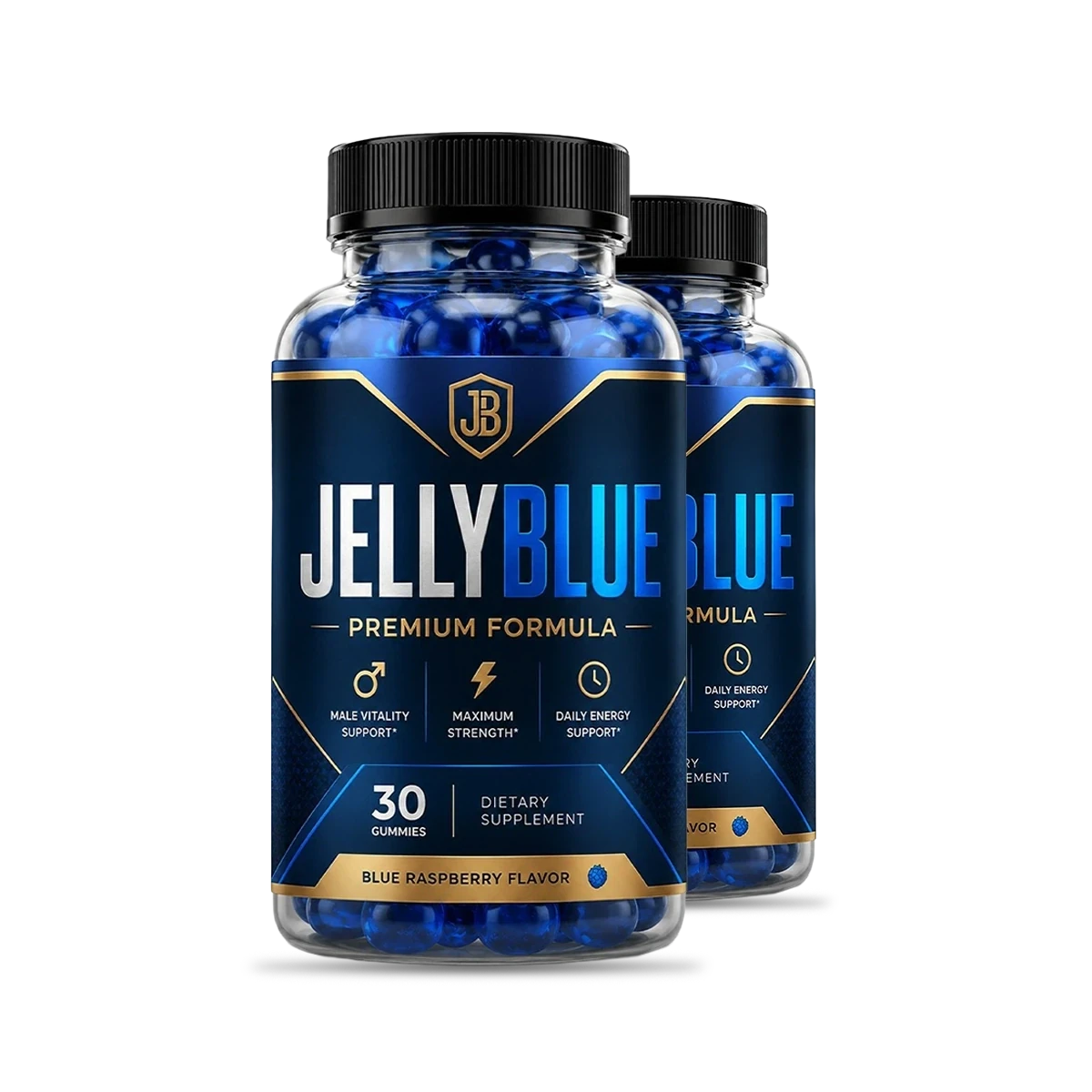
Read every row of the JellyBlue panel for yourself
Seven actives, seven printed amounts, and the questions a printed amount alone cannot answer - all set out on this site.
Two bottles $158 · three bottles $207 · six bottles $294 · 60 days from the day you pay, opened bottles accepted
Order JellyBlueOne gummy a day · 30 to a bottle
What a buyer can actually do about it
- Check whether the panel names a plant part. "Root extract" is more specific than "extract" alone, though this panel only does this for maca.
- Search the brand name plus "standardized" or "extract ratio." A standardized extract is often documented on the manufacturer's own technical pages even when it is not printed on the consumer label.
- Treat a matching milligram figure as a starting point, not a proof. This site's own dosage analysis found one row where the number matches a trial dose; this post is the reason a matching number and a matching substance are still two different questions.
- Remember that "extract" not specifying a ratio is common, not unusual. The ashwagandha audit above found this problem across most of a 25-product commercial sample, not on one bad brand.
None of this is a reason to assume the worst about any single bottle. It is a reason to read "extract" as a category name rather than a specification, on this panel and on every other one in the aisle.
It is also worth being precise about what the ashwagandha and maca findings above do and do not say about this specific product. Neither published paper tested a JellyBlue bottle. The ashwagandha audit tested 25 unnamed commercial products bought on the open market, and the maca study tested raw material from four named growing regions rather than a finished supplement. Both are evidence about how variable this category can be when nobody discloses a ratio or an origin - not a finding about any single brand, including this one. That distinction matters, and it is the reason this post stops at "the panel does not say" rather than claiming to know what a laboratory would find if it tested this particular bottle.
References
- Avula B, Katragunta K, Tatapudi KK, Wang YH, Chittiboyina AG, Khan IA. A Comparison of British and US Pharmacopoeia Standards for Quality of Ashwagandha Dietary Supplements in Commerce. Phytother Res. 2026;40(8):4833-4844. PMID 41386716. https://pubmed.ncbi.nlm.nih.gov/41386716/
- Yan S, Sun Y, Xu Y, Dong Y, Mou H, Wang F, Chen R. Analysis of Macamides and Macaenes in Maca from Different Origins. J Chromatogr Sci. 2026;64(2):bmaf066. PMID 41575064. https://pubmed.ncbi.nlm.nih.gov/41575064/
- Andrews KW, Gusev PA, McNeal M, Savarala S, Dang PTV, Oh L, Atkinson R, Pehrsson PR, Dwyer JT, Saldanha LG, Betz JM, Costello RB, Douglass LW. Dietary Supplement Ingredient Database (DSID) and the Application of Analytically Based Estimates of Ingredient Amount to Intake Calculations. J Nutr. 2018;148(suppl_2):1413S-1421S. PMID 31505677. https://pubmed.ncbi.nlm.nih.gov/31505677/
- Urumarudappa SKJ, Bommuluri V, J S, Chaturvedi S, Mittal AK, Zhang Y, Chang P, Swanson G. Authentication Methods for Phytochemicals (Botanicals) in Plant Extracts and Dietary Supplements. J Diet Suppl. 2025;22(5):680-721. PMID 40783800. https://pubmed.ncbi.nlm.nih.gov/40783800/
- Chinnappan SM, George A, Pandey P, et al. Effect of Eurycoma longifolia standardised aqueous root extract-Physta on testosterone levels and quality of life in ageing male subjects: a randomised, double-blind, placebo-controlled multicentre study. Food Nutr Res. 2021;65:5647. PMID 34262417. https://pubmed.ncbi.nlm.nih.gov/34262417/
More about JellyBlue
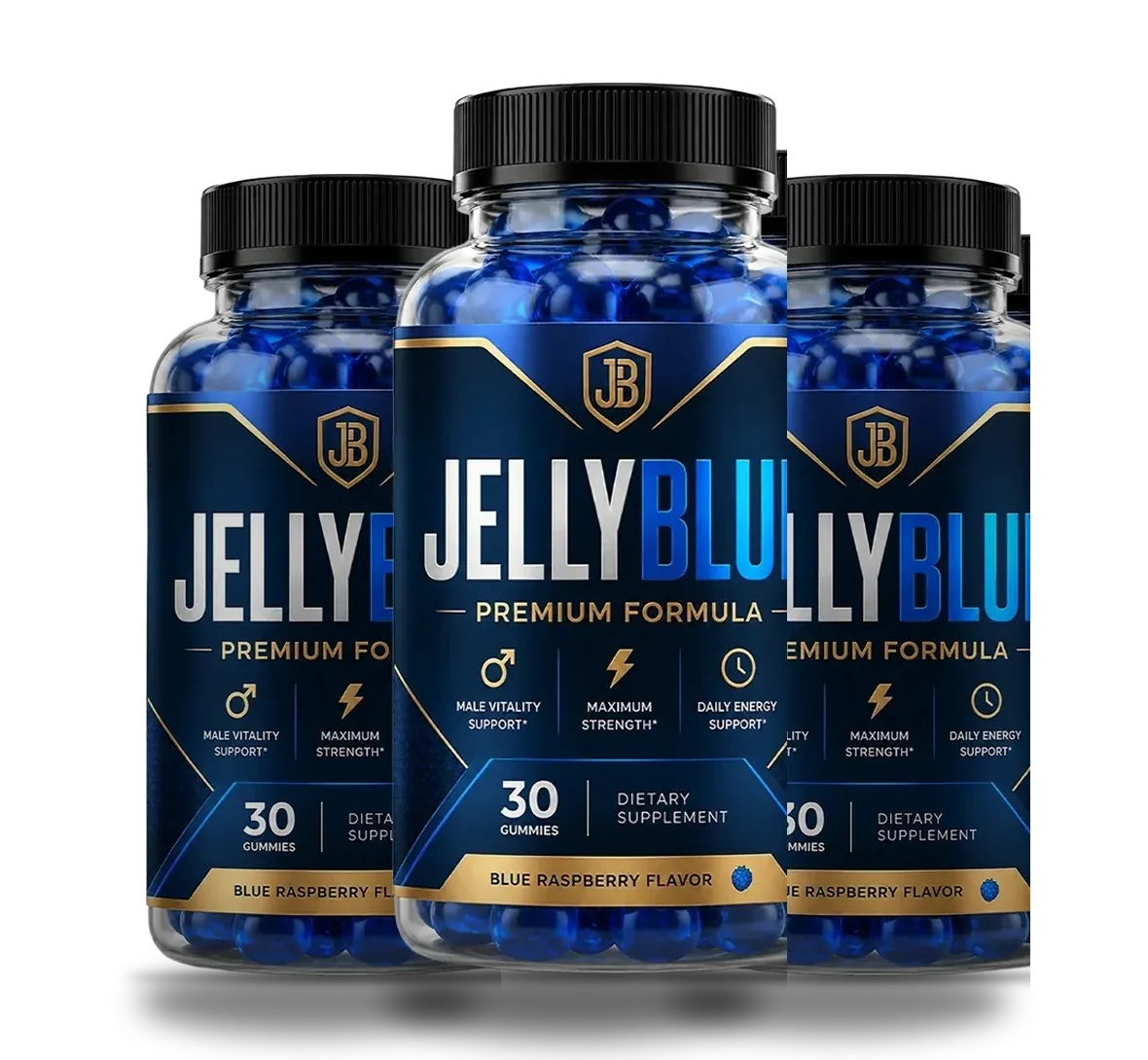
Order JellyBlue with the panel read in full
Seven actives, seven amounts, and now the identity question behind the word "extract" - all printed on this site.
Two bottles $158 · six bottles $294 · 60 days from the day you pay, opened bottles accepted
Order JellyBlueOne gummy a day · 30 to a bottle