JellyBlue Official Website › JellyBlue Ingredients
JellyBlue IngredientsJellyBlue Ingredients: seven actives, seven printed amounts
JellyBlue carries seven actives and prints an individual milligram figure for every one of them.
Tongkat ali 200 mg, maca root 100 mg, ashwagandha 100 mg, horny goat weed 100 mg, L-arginine HCl 50 mg, beet root 50 mg and grape seed 50 mg, adding to 650 mg a gummy. There is no proprietary blend. The seller’s own graphic names six of the seven.
Below, each active gets the amount the panel prints, the dose the published work used, and the citation to check it against. Six of the seven sit below their own research doses and one does not, and both halves are printed.
The JellyBlue formula in panel order
| # | Active | Botanical name | Printed amount | In the advertising? |
|---|---|---|---|---|
| 1 | L-Arginine HCl | — | 50 mg | Yes |
| 2 | Tongkat Ali extract | Eurycoma longifolia | 200 mg | Yes |
| 3 | Maca root extract | Lepidium meyenii | 100 mg | Yes |
| 4 | Ashwagandha extract | Withania somnifera | 100 mg | Yes |
| 5 | Horny goat weed extract | Epimedium sagittatum | 100 mg | Yes |
| 6 | Beet root extract | Beta vulgaris | 50 mg | No |
| 7 | Grape seed extract | Vitis vinifera | 50 mg | Yes |
Panel order is not a ranking. Because each amount is declared individually, a panel may list them in any order; this one opens with the 50 mg arginine and puts the 200 mg tongkat ali second.
Hold the seller’s INSIDE JELLYBLUE graphic against the back of the bottle and the counts disagree. The graphic shows six tiles and prints SIX NAMED INGREDIENTS along the bottom. The Supplement Facts panel names seven. Beet root extract, 50 mg, is the difference.
The panel is the regulated statement and the one a buyer is entitled to rely on, so seven is the number this website uses everywhere.
Every JellyBlue active, with the dose its own research used
Each card prints the amount on the panel, what the published work behind that ingredient actually did, and the distance between the two.
Tongkat Ali extract
Eurycoma longifolia200 mgThe largest amount on this panel and the one name here that lands where the research sat. A twelve-week, double-blind, placebo-controlled multicentre study enrolled 105 men aged 50 to 70 with total testosterone under 300 ng/dL and gave them 100 mg or 200 mg a day of a standardised aqueous root extract. Total testosterone rose against placebo at weeks four, eight and twelve in the 200 mg arm.
The 2022 meta-analysis pooled five randomised trials and reported a standardised mean difference of 1.352 with a confidence interval of 0.565 to 2.138, and closed by saying more research is required before clinical use. An earlier randomised trial of the same extract and a six-month trial in men with age-related androgen decline sit behind it.
The caveat is the preparation, not the number. Those trials used a specific standardised aqueous root extract; this label prints an amount and not a specification, so which extract is in the gummy is not something the bottle answers. A published survey measured mercury in tongkat ali preparations bought on the open market in Malaysia, which is the practical argument for a channel with a lot number rather than an anonymous listing.
Maca root extract
Lepidium meyenii100 mgAn Andean brassica root, and one of the few names in this category with a randomised trial in healthy men rather than in a dish. The twelve-week trial gave men aged 21 to 56 either 1,500 mg or 3,000 mg of gelatinised maca a day. Self-reported sexual desire improved from week eight - and serum testosterone and oestradiol did not move, which the authors make a point of.
The systematic review found four randomised trials, two showing an effect and one showing none, and its own verdict is limited evidence.
The distance here is fifteen-fold. This panel prints 100 mg against the smaller of the two trial doses at 1,500 mg. That is the shape of most of this panel and it is set out row by row in the dose section on the home page.
Ashwagandha extract
Withania somnifera100 mgThe adaptogen with the deepest recent trial record of the seven, and the one whose evidence is about stress and sleep rather than about vitality. A meta-analysis of twelve trials in 1,002 participants aged 25 to 48 found anxiety fell with a standardised mean difference of -1.55. A separate meta-analysis of five trials in 400 adults found the effect on sleep clearest at 600 mg a day and above, over eight weeks or longer, and a systematic review of nine studies reports a fall in cortisol with no significant adverse effects.
At 100 mg this panel sits a sixth below the threshold the sleep analysis identified. NCCIH's own page sets out the cautions worth knowing: thyroid medicine, sedatives, pregnancy, and the rare liver injury that LiverTox catalogues at full extract doses.
Why it is in a male vitality bottle at all is a fair question. Stress, sleep and energy are the things men describe when they say they feel flat, and ashwagandha is the name in this bottle with trials measuring exactly those.
Horny goat weed extract
Epimedium sagittatum100 mgThe name with the longest folk history in this category and the thinnest modern human record. There is no randomised trial of epimedium or icariin in men to quote, and this desk looked rather than assumed.
What exists is chemistry. An isolation study pulled 8-isopentenyl flavonoids out of Epimedium sagittatum and showed they inhibit PDE5A in vitro - the same enzyme family a prescription medicine acts on, in a test tube rather than in a person. That is genuinely interesting chemistry and it is not a result about this gummy.
The one practical consequence: anyone already taking a prescribed PDE5 inhibitor should mention this ingredient to whoever prescribes it. Not because a supplement dose is known to interact, but because nobody has measured whether it does.
L-Arginine HCl
50 mgThe only non-botanical active on the panel, and the first row printed. An amino acid that feeds the nitric oxide pathway.
The meta-analysis pooled ten randomised trials covering 540 men with mild to moderate erectile difficulty and found arginine supplements improved outcomes against placebo, odds ratio 3.37. Every trial in it used between 1,500 mg and 5,000 mg a day. A 2024 network meta-analysis of nutraceuticals studied for the same use places it in a wider ranking.
This panel prints 50 mg, which is thirty times below the smallest dose in that range. It is the largest gap on the label and it is printed here rather than left for a reader to work out. The reason it still belongs in the bottle is that it and beet root work the same pathway from different directions, which is the one piece of genuine formulation logic on this panel.
Beet root extract
Beta vulgaris50 mgThe seventh name, and the one the seller’s own advertising leaves off. The INSIDE JELLYBLUE graphic shows six tiles and prints SIX NAMED INGREDIENTS across the bottom; the panel on the back of the same bottle prints beet root extract at 50 mg.
It is also the name with the largest and most recent human evidence base of the seven. A 2024 meta-analysis pooled eleven randomised trials covering 349 people with clinical blood pressure at or above 140/90 and found that 200 to 800 mg of nitrate a day, from beetroot juice, lowered clinical systolic pressure by 5.31 mmHg. GRADE certainty was low and the authors say so.
None of that arithmetic transfers to 50 mg of beet root extract in a gummy, and this desk does not pretend it does: the trials used juice, the dose was measured as nitrate, and this panel prints no nitrate figure at all. What is odd is narrower and more interesting than any dose claim - the advertising left off the ingredient with the strongest recent human record on the label.
Grape seed extract
Vitis vinifera50 mgThe proanthocyanidin ingredient, and the second of the two names on this panel with vascular rather than hormonal evidence behind it. A 2022 meta-analysis of nineteen controlled trials found grape seed extract lowered diastolic pressure by 2.20 mmHg and heart rate by 1.25 bpm, while flow-mediated dilation and systolic pressure did not move significantly.
Dose and duration were both named as sources of heterogeneity in that analysis, and 50 mg sits at the very bottom of the range those trials covered. It is the joint-smallest amount on this panel.
In a bottle built around a nitric oxide theme it is a sensible companion to arginine and beet root rather than a headline ingredient, and the panel treats it as one: last row, smallest amount.
What is not active in a JellyBlue gummy
The other-ingredients line reads: cane sugar, glucose syrup, water, pectin, citric acid, sodium citrate, natural flavor, natural coloring, starch.
| Ingredient | What it is doing |
|---|---|
| Cane sugar, glucose syrup | The sweeteners, and the source of the 1.5 g of sugars the panel prints. |
| Pectin | The gelling agent. Fruit-derived rather than animal-derived, which is why a vegetarian mark ships with the bottle. |
| Water | The carrier the gummy is set from. |
| Citric acid, sodium citrate | Acidity and buffering. The pair that makes a pectin gummy set reliably and keeps it stable. |
| Natural flavor | Blue raspberry, which is what the front of the bottle says. |
| Natural coloring | The blue the gummies are. |
| Starch | Moulding and anti-stick. |
Nine names, none of them active. A chewable needs a matrix and this is it.
That matrix is the reason the panel carries a nutrition block at all, and the reason the amounts on it are what they are: a gummy cannot hold gram-scale doses. The published work on quality standards for gummy supplements sets out why uniformity between units is its own manufacturing problem in this format.
What the JellyBlue panel cannot tell you
| What | How a buyer checks it | Outcome |
|---|---|---|
| Which tongkat ali extract | Nothing on the label answers this. | Not published. The trials used a specific standardised aqueous root extract; the panel prints an amount, not a specification. |
| Whether the contents match the panel | Nothing on the label answers this either. | Not established. No independent assay of this product exists, in either direction. |
| Where each botanical was grown | The origin line says globally sourced and stops there. | Not published, which is ordinary for this category rather than unusual. |
| Whether any of it does anything | No trial has tested this combination in anyone. | Unknown. Seven ingredient literatures are not one product result. |
Four honest unknowns, stated once here rather than repeated on every page.
What can be checked is the arithmetic, and it checks out: the seven printed amounts add to 650 mg, the front count of thirty matches the servings per container, and the carbohydrate percentage is correct against the published Daily Value. The federal rule governing this panel is what makes those figures a statement rather than a courtesy.
JellyBlue ingredients: questions people ask
How many ingredients are in JellyBlue?
Seven actives on the Supplement Facts panel, each with its own printed amount, adding to 650 mg a gummy. The seller’s own listing graphic names six of them.
Which ingredient does the JellyBlue advertising leave out?
Beet root extract, 50 mg. It is on the panel and not on the INSIDE JELLYBLUE graphic, and it is the ingredient here with the most recent human meta-analysis behind it.
Does JellyBlue publish the amount of each ingredient?
Yes. There is no proprietary blend anywhere on this label, which is unusual in this category and is what makes every comparison on this page possible.
Which JellyBlue ingredient is at a dose the research used?
Tongkat ali, at 200 mg. A twelve-week trial in 105 ageing men used 100 mg and 200 mg a day of a standardised aqueous root extract. The other six sit below their trial doses or have no human dose to compare with.
Are there allergens in JellyBlue?
The other-ingredients line names cane sugar, glucose syrup, water, pectin, citric acid, sodium citrate, natural flavour, natural colouring and starch. Gluten-free, dairy-free and vegetarian marks ship with the bottle; the gelling agent is pectin, which is fruit-derived.
Who publishes this JellyBlue ingredients page?
- Rhim HC, Kim MS, Park YJ, et al. The Potential Role of Arginine Supplements on Erectile Dysfunction: A Systemic Review and Meta-Analysis. J Sex Med. 2019;16(2):223-234. PMID 30770070. https://pubmed.ncbi.nlm.nih.gov/30770070/
- Barbonetti A, Tienforti D, Antolini F, et al. Nutraceutical interventions for erectile dysfunction: a systematic review and network meta-analysis. J Sex Med. 2024;21(11):1054-1063. PMID 39279185. https://pubmed.ncbi.nlm.nih.gov/39279185/
- Leisegang K, Finelli R, Sikka SC, Panner Selvam MK. Eurycoma longifolia (Jack) Improves Serum Total Testosterone in Men: A Systematic Review and Meta-Analysis of Clinical Trials. Medicina (Kaunas). 2022;58(8):1047. PMID 36013514. https://pubmed.ncbi.nlm.nih.gov/36013514/
- Chinnappan SM, George A, Pandey P, et al. Effect of Eurycoma longifolia standardised aqueous root extract-Physta on testosterone levels and quality of life in ageing male subjects: a randomised, double-blind, placebo-controlled multicentre study. Food Nutr Res. 2021;65:5647. PMID 34262417. https://pubmed.ncbi.nlm.nih.gov/34262417/
- Ismail SB, Wan Mohammad WM, George A, et al. Randomized Clinical Trial on the Use of PHYSTA Freeze-Dried Water Extract of Eurycoma longifolia for the Improvement of Quality of Life and Sexual Well-Being in Men. Evid Based Complement Alternat Med. 2012;2012:429268. PMID 23243445. https://pubmed.ncbi.nlm.nih.gov/23243445/
- Leitão AE, Vieira MCS, Pelegrini A, et al. A 6-month, double-blind, placebo-controlled, randomized trial to evaluate the effect of Eurycoma longifolia (Tongkat Ali) and concurrent training on erectile function and testosterone levels in androgen deficiency of aging males (ADAM). Maturitas. 2021;145:78-85. PMID 33541567. https://pubmed.ncbi.nlm.nih.gov/33541567/
- Ang HH, Lee EL, Cheang HS. Determination of mercury by cold vapor atomic absorption spectrophotometer in Tongkat Ali preparations obtained in Malaysia. Int J Toxicol. 2004;23(1):65-71. PMID 15162849. https://pubmed.ncbi.nlm.nih.gov/15162849/
- Gonzales GF, Córdova A, Vega K, et al. Effect of Lepidium meyenii (MACA) on sexual desire and its absent relationship with serum testosterone levels in adult healthy men. Andrologia. 2002;34(6):367-72. PMID 12472620. https://pubmed.ncbi.nlm.nih.gov/12472620/
- Shin BC, Lee MS, Yang EJ, et al. Maca (L. meyenii) for improving sexual function: a systematic review. BMC Complement Altern Med. 2010;10:44. PMID 20691074. https://pubmed.ncbi.nlm.nih.gov/20691074/
- Akhgarjand C, Asoudeh F, Bagheri A, et al. Does Ashwagandha supplementation have a beneficial effect on the management of anxiety and stress? A systematic review and meta-analysis of randomized controlled trials. Phytother Res. 2022;36(11):4115-4124. PMID 36017529. https://pubmed.ncbi.nlm.nih.gov/36017529/
- Cheah KL, Norhayati MN, Husniati Yaacob L, et al. Effect of Ashwagandha (Withania somnifera) extract on sleep: A systematic review and meta-analysis. PLoS One. 2021;16(9):e0257843. PMID 34559859. https://pubmed.ncbi.nlm.nih.gov/34559859/
- Della Porta M, Maier JA, Cazzola R. Effects of Withania somnifera on Cortisol Levels in Stressed Human Subjects: A Systematic Review. Nutrients. 2023;15(24):5015. PMID 38140274. https://pubmed.ncbi.nlm.nih.gov/38140274/
- Ashwagandha. National Center for Complementary and Integrative Health, National Institutes of Health. https://www.nccih.nih.gov/health/ashwagandha
- Ashwagandha. LiverTox: Clinical and Research Information on Drug-Induced Liver Injury. National Institute of Diabetes and Digestive and Kidney Diseases, Bethesda MD. https://www.ncbi.nlm.nih.gov/books/NBK548536/
- Li J, Wu Y, Yu X, et al. Isolation, bioassay and 3D-QSAR analysis of 8-isopentenyl flavonoids from Epimedium sagittatum maxim. as PDE5A inhibitors. Chin Med. 2022;17(1):147. PMID 36587222. https://pubmed.ncbi.nlm.nih.gov/36587222/
- Grönroos R, Eggertsen R, Bernhardsson S, Praetorius Björk M. Effects of beetroot juice on blood pressure in hypertension according to European Society of Hypertension Guidelines: A systematic review and meta-analysis. Nutr Metab Cardiovasc Dis. 2024;34(10):2240-2256. PMID 39069465. https://pubmed.ncbi.nlm.nih.gov/39069465/
- Foshati S, Nouripour F, Sadeghi E, Amani R. The effect of grape (Vitis vinifera) seed extract supplementation on flow-mediated dilation, blood pressure, and heart rate: A systematic review and meta-analysis of controlled trials with duration- and dose-response analysis. Pharmacol Res. 2022;175:105905. PMID 34798267. https://pubmed.ncbi.nlm.nih.gov/34798267/
- Adeleke OA, Abedin S. Characterization of Prototype Gummy Formulations Provides Insight into Setting Quality Standards. AAPS PharmSciTech. 2024;25(6):155. PMID 38960983. https://pubmed.ncbi.nlm.nih.gov/38960983/
- 21 CFR 101.36, Nutrition labeling of dietary supplements. Electronic Code of Federal Regulations, Office of the Federal Register. https://www.ecfr.gov/current/title-21/chapter-I/subchapter-B/part-101/subpart-F/section-101.36
More about JellyBlue
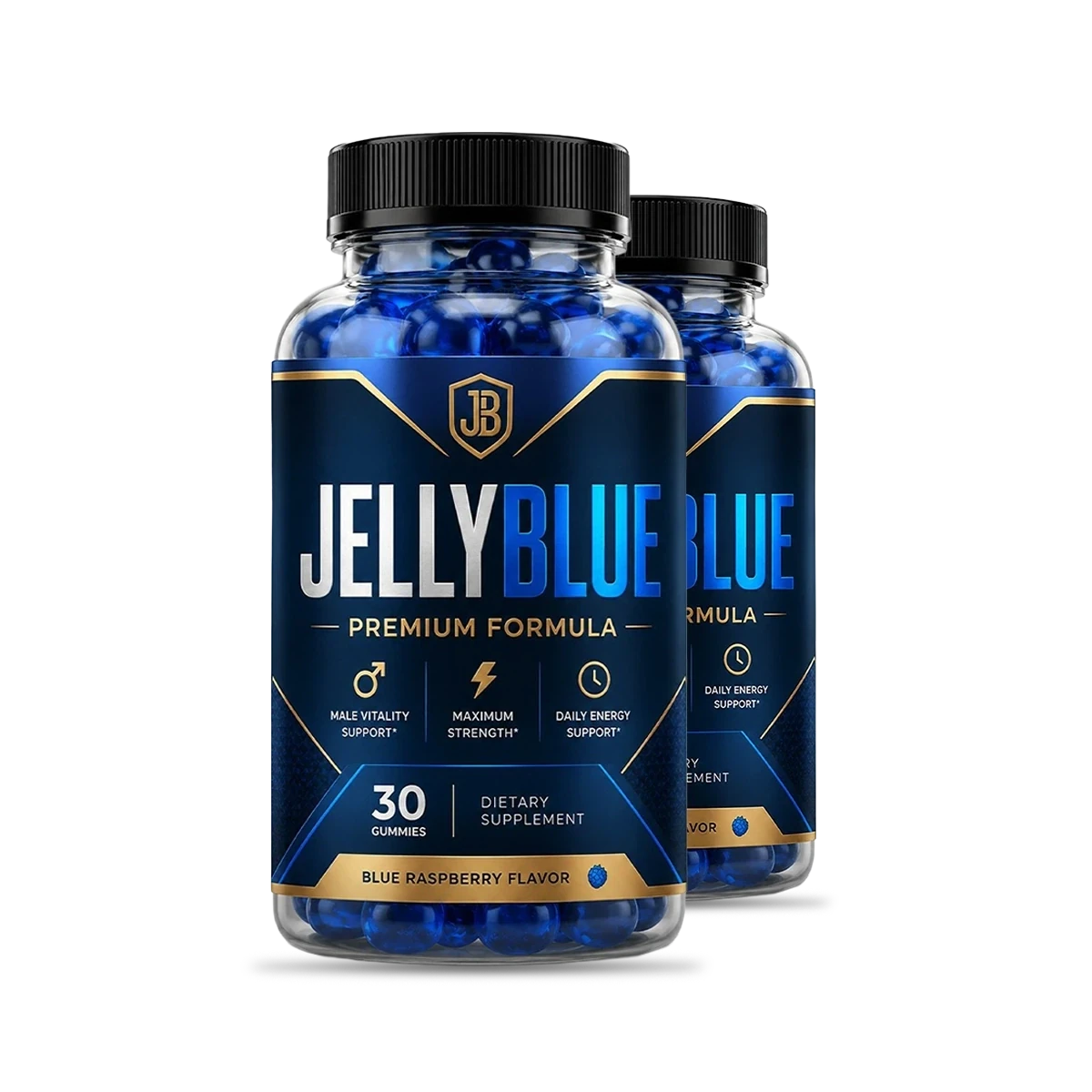
Order JellyBlue with every amount printed on the panel
Seven actives, seven milligram figures, 650 mg a gummy and no proprietary blend. One gummy a day, thirty to a bottle.
Two bottles $158 · six bottles $294 · 60 days from the day you pay, opened bottles accepted
Order JellyBlue On The Official WebsiteOne gummy a day · 30 to a bottle · lot JEL-26/JE-5599